admin
admin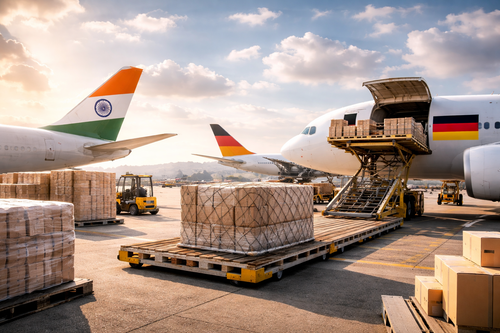
Why Air Freight Matters for India–Germany Trade
Air cargo carries only a small share of global trade by weight, but it handles a much larger share by value. That is why it plays such an important role on routes connected with manufacturing, healthcare, and technology.
India exports a wide range of goods that often require controlled and predictable delivery. Germany, in turn, is one of Europe’s major industrial markets, with strong demand for components, machinery, and time-sensitive cargo. More route-specific details can be found on this site.
Compared with sea freight, air transport offers a clear advantage in speed. For businesses shipping urgent or valuable cargo, that difference can be more important than the higher freight rate.
What Affects Delivery Time from India to Germany
Several factors influence how quickly cargo moves between India and Germany, even when air freight is used.
Flight routing and transit hubs
Not every shipment moves on a direct flight. Many cargo flows pass through major hubs, especially in the Middle East. A well-planned connection can improve flexibility, but each additional transfer adds handling time.
Customs and documentation
Customs clearance remains one of the most important stages in international shipping. Incorrect paperwork, product classification issues, or missing export and import documents can delay cargo even when flight capacity is available.
Cargo type and handling requirements
Pharmaceutical products, dangerous goods, oversized cargo, and fragile shipments often require special procedures. Extra checks, packaging standards, and compliance rules can all affect timing.
Seasonal demand
Air freight capacity changes throughout the year. During peak shipping periods, limited space can affect both transit planning and pricing.
Key Challenges in India to Germany Air Freight
Cost pressure
Air freight is faster than most alternatives, but it is also more expensive. Companies need to decide when speed creates real business value.
Coordination across the chain
Airport-to-airport transport is only one part of the process. Pickup, terminal handling, customs work, and final delivery must all be aligned.
Disruption risk
Weather, congestion, schedule changes, and operational constraints can still affect air cargo. Fast transport reduces some risks, but it does not eliminate them completely.
Why Companies Use Air Freight Strategically
Businesses rarely choose air freight for every shipment. In most cases, they use it selectively for urgent orders, critical parts, or goods with high value relative to weight. This makes air cargo a strategic tool rather than a default option.
For example, a delayed industrial component can interrupt production, while a late medical shipment may affect availability where timing is essential. In such cases, the real cost is not the freight invoice but the impact of delay.
Conclusion
India to Germany logistics requires more than booking space on a flight. Companies need to understand routing, documentation, cargo requirements, and the commercial impact of timing.
Air freight remains one of the most effective options for businesses that need speed, control, and reliability on this route. When used strategically, it helps reduce disruption, protect supply chains, and support more predictable international trade.